Tag ‘25 Jahre menschliche Bewegung’


Projekte

Wearables Revolutionize Performance Diagnostics in Girls’ Soccer

A new study on performance diagnostics in girls’ soccer demonstrates how innovative wearable technology and subjective self-assessments are setting new standards in training analysis. The Human Motion Analytics research team at Salzburg Research, in collaboration with Adidas AG, has published its latest findings in the renowned journal Frontiers in Sports and Active Living.

Technology meets training practice: smart insoles in use

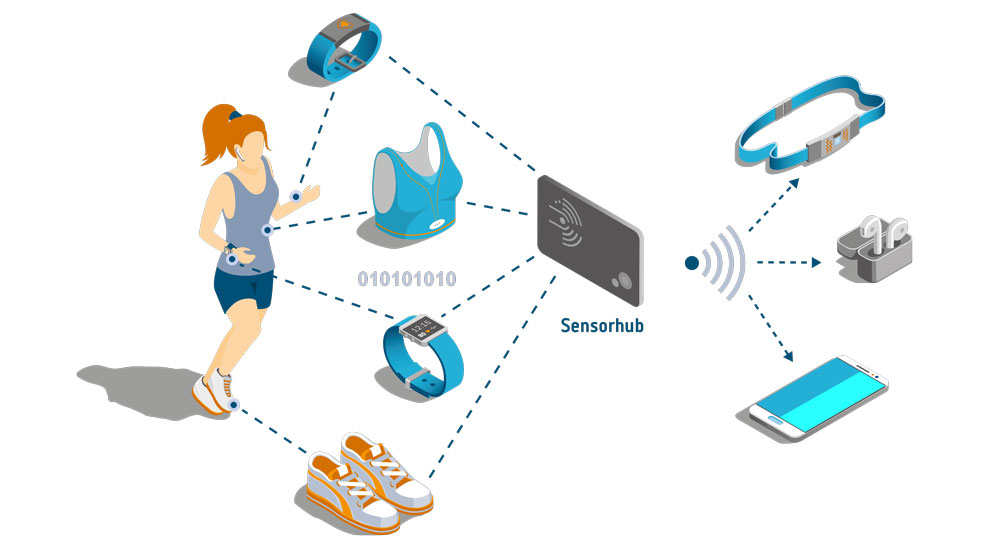
The study examined 46 players from the U17 and U20 teams of 1. FC Nürnberg. The players wore smart insoles for 14 months. The insoles contained inertial measurement units (IMUs) that recorded precise movement data during regular training sessions. Additionally, the players documented their perceived training intensity and emotional experience after each session.

The goal was to combine objective performance metrics, such as ball speed, top speed, and running distance, with subjective assessments.
Emotional states influence performance levels

The evaluation revealed that approximately half of the observed players exhibited significant performance trends, both positive and negative. The change in top speed was especially notable.

One notable finding concerns the perceived intensity of training. Players who found training particularly strenuous tended to have lower ball speeds, especially goalkeepers and defenders. Conversely, higher running performance was often associated with a high subjective assessment of intensity. Emotional factors also played an important role. Players who felt happier after training showed better technical performance, especially in the midfield.
Individualized training management – relevance beyond soccer

The results demonstrate the perfect complementarity of technological and psychological perspectives. Combining high-resolution sensor data with personal assessments opens up new possibilities for personalized training, targeted stress management, and effective injury prevention.

Although this study focuses on girls’ soccer, researchers see great potential in transferring the methodology to other sports, such as handball or basketball. They also see potential in applying it to competitive sports in general.

The study was conducted as part of the research project “DiMo-NEXT—Next Level of Digital Motion in Sports, Fitness, and Well-Being.” The project is funded by the COMET program (Competence Centers for Excellent Technologies) through the Federal Ministry for Innovation, Mobility, and Infrastructure (BMIMI), the Federal Ministry for Economic Affairs, Energy, and Tourism (BMWET), the FFG, and the federal states of Salzburg, Tyrol, and Upper Austria.

Photos: © adidas

More information:

Analyzing Personal Skiing Technique and Avoiding Accidents with Technology

Skiing is a popular sport in a lot of countries. The sport offers considerable touristic, economic, and health benefits; however, it is also associated with a high risk of accidents. Together with partners, Salzburg Research has developed and tested a method to assess the quality of skiing. It should help skiers to analyze their ski technique and thus avoid accidents and injuries.

In order to reduce the risk of accidents and fatalities, it is important that skiers are able to accurately assess their own skiing ability. To this end, Salzburg Research and its partners have developed a sensor-based feedback system— the so-called Connected Boot —with professional skiers. A pilot study was conducted in the winter of 2024 to test how recreational skiers could also benefit from this technology to assess and improve their skiing technique. The results have been published in the journal Frontiers in Sports and Active Living.

Sensor technology analyzes skiing ability

The research led by Christina and Stefan Kranzinger used an IMU sensor system, called the “Connected Boot,” to analyze the skiing quality of 62 recreational skiers. The “Connected Boot” records kinematic parameters such as edge angle, speed, and forces to generate a quality score on a scale of 1 to 10.

Stefan Kranzinger

„The Ski Quality Score was developed using data from professional skiers and gives recreational skiers instant feedback after each run, directly on their own smartphones.”

– Stefan Kranzinger, Data Scientist at Salzburg Research

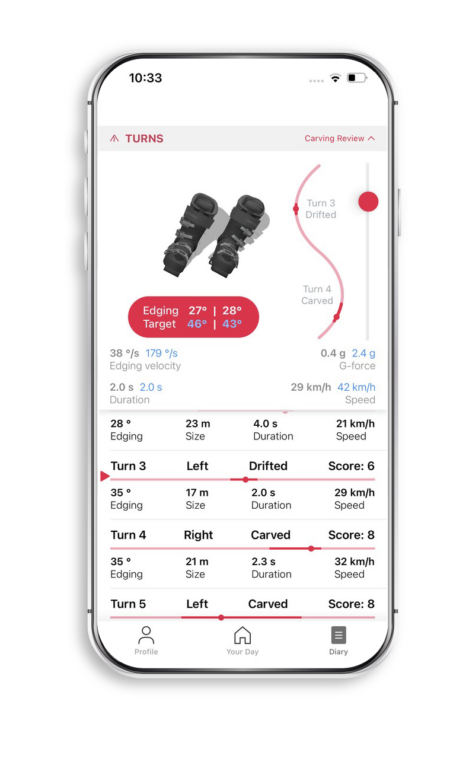
Innovative Technologie hilft Skifahrenden, ihre Skitechnik zu analysieren und dadurch Unfälle und Verletzungen zu vermeiden: Echtzeit-Feedback direkt auf das Smartphone © Salzburg Research
Example feedback for a selected ski turn: The shadow shows the ideal edge, the black boots show the actual edge in this turn.

Each turn individually, the average of each run, and the daily average are automatically scored from 1 to 10, where “1” corresponds to a “snowplow or pizza slice” and “10” can usually be achieved by only professional or top skiers in optimal conditions.

The results were compared with the participants’ subjective self-assessments collected before and after using the technology on the slopes.

Innovative methodology: Living Lab approach

The data was collected using a living lab approach. Participants selected their own ski resorts and used the sensor system in real-world environments. This user-centric approach provided authentic feedback and valuable insights for the future development of the technology.

Key results

The majority of participants agreed that the Connected Boot sensor system provided useful skiing information and improved their skiing style. Key findings of the study include:

  • High correlation between technology and self-assessment: The measured ski quality scores correlated strongly with the subjective assessment of carving ability. This confirms the reliability of the technology, even for recreational skiers.
  • Gender differences: Female participants significantly adjusted their self-evaluations after using the technology, while male participants did not. These differences may be due to different perceptions and responses to feedback.
  • Experience influences scores: Skiers with more than 15 days of skiing experience per season achieved significantly higher quality scores than less experienced participants.
Stefan Kranzinger

„The study shows that the Connected Boot can be a valuable tool for improving skiing technique by providing users with direct and accurate feedback. This could not only increase the enjoyment of the sport but also reduce the risk of accidents caused by overestimating one’s own abilities.”

– Stefan Kranzinger, Data Scientist at Salzburg Research


Background information

The Connected Boot was developed by Salzburg Research together with Atomic and the University of Salzburg as part of the COMET project “Digital Motion in Sports, Fitness and Well-being“. The study with recreational skiers was funded by the state of Salzburg as part of follow-up projects.

Publication: Christina Kranzinger, Stefan Kranzinger, Eva Hollauf, Harald Rieser, Thomas Stöggl (2024): Skiing quality analysis of recreational skiers based on IMU data and self-assessment. In: Frontiers in Sports and Active Living, 24 December 2024, Sec. Sports Science, Technology and Engineering, Volume 6 – 2024. https://doi.org/10.3389/fspor.2024.1495176

More information in the press release: Feedback in Echtzeit: Wie Freizeit-Skifahrende durch innovative Technologie von Profis lernen können

Jump Detection in Skiing and Winter Sports

A new algorithm detects “big air” jumps and other types of jumps in skiing automatically and in real time. This new method could improve training and performance assessment in the professional and recreational sectors.

more

Feedback System for Riders to Avoid Mistakes

Salzburg Research is developing a concept for a measuring system for the EWOT Riding Academy to record the balance and movement of riders and horses.

Riding is a complex sport in which the interaction between rider and horse must be perfectly coordinated. Experienced trainers traditionally instruct riding students, making necessary corrections. However, as soon as this control is absent, there is a risk that riding students will fall back into unfavorable movement patterns. This is where the current research by Salzburg Research comes in. Salzburg Research is developing a system for the EWOT Riding Academy to digitally record and analyze common errors in equestrian sports. Such a database can be the basis for a feedback system that recognizes the riding mistakes and provides correction suggestions. Not only the riders could benefit from this, but also the health of the horse. 

Sensors measure the balance and movement of the rider and horse

The researchers from the group “Human Motion Analytics” at Salzburg Research are working on a proof-of-concept in which various measurement systems are being tested for recording the balance of a rider and the gait of the horse. The following sensors are used, among others:

  • IMUs (Inertial Measurement Units): These sensors use accelerometers, gyroscopes, and magnetometers to determine orientation in space. They can be attached to the rider’s body and the horse’s pasterns to record movement data.
  • Pressure sensors: Pressure sensors can be used to measure the pressure distribution between the calf of the rider and the horse, as well as the pressure exerted on the stirrups in the shoes.
  • Motion capture system: By combining the motion data with a three-dimensional body model, the rider’s total physical movement can be recorded and the center of mass estimated.

Reference data should identify incorrect posture

In order to determine whether the acquired sensor data is suitable for this application, Salzburg Research is currently carrying out measurements with riders of different experience levels. Reference data is collected for optimal posture and for characteristic faulty motion sequences. Subsequent data analysis should determine whether the incorrect postures of the riders can be identified in the sensor data. Should the concept prove successful in practice, a digital feedback system can then be developed. It should help riders avoid mistakes and improve their technique.


First steps towards digitalization: free-of-charge testing before investing

This research project is funded within the framework of the European Digital Innovation Hub’s (EDIH) “Crowd in Motion.” The EDIH “Crowd in Motion” supports businesses and organizations in the digital transformation in the tourism, sports, and leisure industries with tailor-made advice and services, completely free of charge for small and medium-sized enterprises, organizations, and public institutions.

The EDIH is a perfect instrument for taking the first steps towards digitalization, with the know-how of experts, matching infrastructure, and scientific foundation. The advice in the category “Test before Invest” provides the EWOT Riding Academy with an opportunity to experiment professionally before investing a lot of money in a sensor system that may not function properly.


Ihre Herausforderung, unsere Expertise:
Entdecken Sie die vielfältigen Anwendungsmöglichkeiten unserer Methoden, Tools und Technologien.
Kontaktieren Sie uns für eine individuelle Beratung!

Intelligent Firefighter Jacket Protects Emergency Personnel

Salzburg Research and the University of Salzburg developed an intelligent firefighter jacket on behalf of the fire service supplier Texport GmbH. Sensors built into the jacket report impending overheating and immediately initiate countermeasures. The prototype has now been successfully tested in the fire simulation system under real conditions.

Firefighting operations are very demanding: high temperatures, heavy protective clothing, physical exertion, and psychological stress put an enormous burden on the emergency services. If it gets too hot in the suit, heat stress occurs when the core body temperature reaches around 38.5° Celsius. Those affected are more willing to take risks, more impulsive, may make wrong decisions, and overestimate their physical capabilities. In extreme cases, firefighters can collapse.

Intelligente Feuerwehrjacke schützt Einsatzkräfte

Mit dem Klick auf das Bild werden durch den mit uns gemeinsam Verantwortlichen Youtube (Google Ireland Limited) das Video abgespielt, auf Ihrem PC Skripte geladen sowie personenbezogene Daten erfasst.

Automatic detection of the critical point

Salzburg Research therefore worked with the University of Salzburg to find ways to automatically avoid heat stress. The first step was to identify the critical point at which firefighters are at risk of overheating. To do this, sensors were integrated into the jacket to measure sweat and humidity. In an initial laboratory study, 19 participants were subjected to physical stress tests in full gear. The optimal sensors and their placement were determined in order to reliably determine heat stress. The algorithm developed now recognizes the point at which it becomes too hot for firefighters.

Automatic cooling in case of heat stress

A cooling system was then installed in the jacket lining to improve the vital parameters and well-being of the firefighters and increase the safety of operations. The innovative air cooling system sparingly uses the air that firefighters carry in an additional compressed air cylinder.

From Lab to Field: Test in the fire simulation system

Prototypes of the fire jacket were tested in the summer under real conditions in the fire simulation system. Twelve firefighters completed a simulated fire mission with and without the cooling system. Sensor data and feedback confirmed the effectiveness of the system.

The research work was funded as a cross-state cooperation within the framework of the WISS2025 strategy of the state of Salzburg.


More information:


Ihre Herausforderung, unsere Expertise:
Entdecken Sie die vielfältigen Anwendungsmöglichkeiten unserer Methoden, Tools und Technologien.
Kontaktieren Sie uns für eine individuelle Beratung!

Digital in the Ice Canal: With Digital Feedback to the Ideal Sledding Line

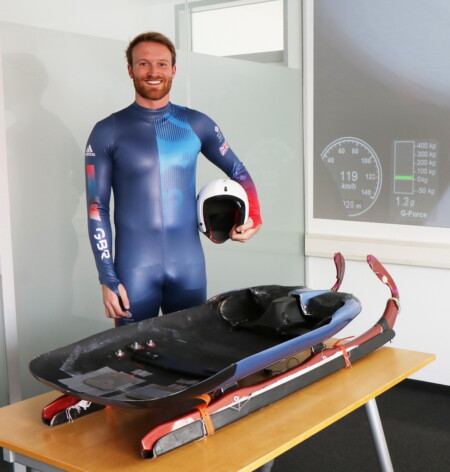
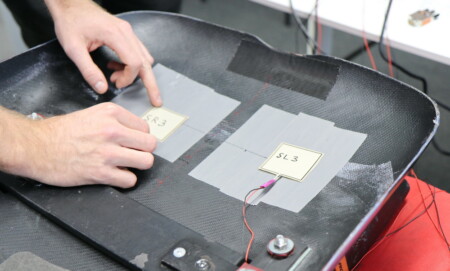
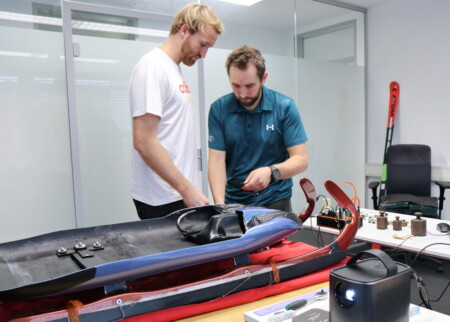
Six pressure sensors are hidden in the sled of Rupert Staudinger. Born in Bayer, he is a two-time Olympic toboggan runner, a trainer at the German Bob-and-Sledge Association, and a researcher at Salzburg Research. With the help of smart sensors, he is developing a digital feedback system that is supposed to digitize the sport of tobogganing and bring tobogganing professionals ever closer to the ideal line in the ice channel.

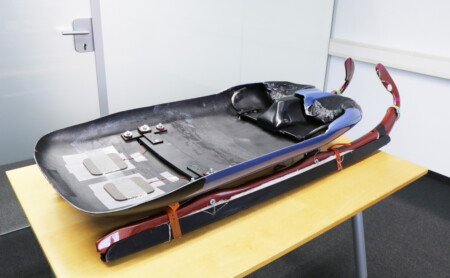
The race sled used by Rupert Staudinger at the 2022 Winter Olympics in Beijing is currently more like a high-tech analytical device than a sports device. Six ultra-thin pressure sensors are attached to the sled: two in the shoulder area, two on the handles, and two on the arches of the skates, the so-called “horns.” With the help of this prototype, the two-time Olympic participant is working on the digitalization of his sport. 

Making barely visible movements digitally visible

Racing toboggan athletes steer the sled with the finest weight shifts of the upper body by pulling the grips and pressing the legs on the horns. “Steering is a whole-body movement with fine and well-timed movements that are usually invisible to the naked eye. With my research, I want to make these movements measurable and thus further develop the sport of tobogganing with digital help,” says Salzburg Research researcher and two-time Olympic participant Rupert Staudinger.

So far, the races are usually discussed via radio with the trainers, who are positioned at certain sections of the route, and later in the hotel through video evaluation. In addition, the intermediate times are used to analyze where time was lost.

“Good material, a fast start, low drag, and an ideal driving line are crucial for sporting success in toboggan racing. Real-time data on steering techniques can provide valuable insights for performance analysis and improvement. For example, personalized training plans tailored to individual steering patterns could be developed,” says André Sander from the German Bob-and-Sledge Association.


Detailed work on the sensor setup

The research work of Rupert Staudinger is at the forefront of bringing digitalization into bobsledding and tobogganing. There is no method of measuring steering impulses yet, and whether this works at all or not is currently being researched and tested. The application-oriented research institute Salzburg Research offers the necessary know-how in sensor technology and measurement with new technologies.

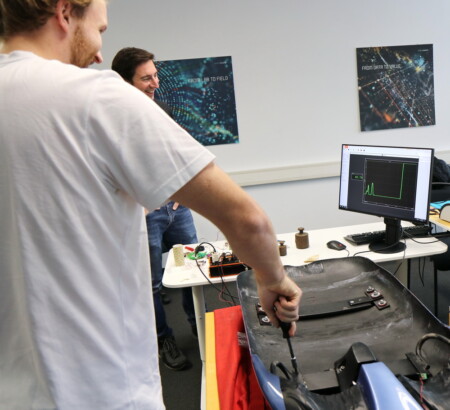
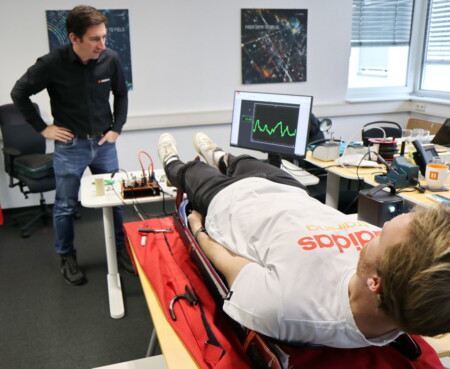
“In the beginning, it was important to find a fitting setup for the sensor system: which sensor system is suitable, how many sensors are needed, and where and how they are best installed in order to be able to obtain meaningful data on the interactions of the athletes,” says Staudinger. In an iterative process, the quality of the data is assessed, and whether the collected data reproduces the steering impulses in a way that can be used for further data analysis is researched. It’s still being tested and tweaked in the lab. In a final step, the system is to be tested in a real environment, i.e., directly in the ice tracks.


First steps towards digitalization: Free testing before investment

This research is funded by the European Digital Innovation Hub (EDIH) “Crowd in Motion.” The EDIH „Crowd in Motion“ supports companies and organizations in their digital transformation in the tourism, sports, and leisure industries with tailor-made advice and services, usually completely free of charge for small and medium-sized businesses, organizations, and public institutions.

The EDIH is an ideal tool for taking the first steps towards digitalization with the know-how of experts, the suitable infrastructure, and a scientific base. Counseling in the area of “Test before Invest” provides the Bob-and-Sledge Association with the opportunity to experiment professionally before a lot of money is invested in a sensor system that may not function properly.


More information in the press info:
Digital im Eiskanal: Mit dem digitalen Rennrodel zur Ideallinie

Excellent Technology Research: COMET Project Digital Motion

To strengthen the innovation and business location and its position at the forefront of international research, the federal and state governments are promoting application-oriented cutting-edge research with the COMET programme. The COMET project “Digital Motion”, led by Salzburg Research and the University of Salzburg, has now been approved for funding for four years in a highly competitive process. This will take cooperation between business and science in the field of digitalisation & sport to a new level. With a budget totalling six million euros, work will be carried out in the coming years on digital technologies for more vitality and safety in movement and sport.

The new COMET project aims to bring more vitality and safety to exercise and sport. With the help of digital technologies such as new sensor systems, digital textiles and artificial intelligence, the consortium is developing data-driven innovations for safety and behavioural changes in physical activity. The focus is on incentivising greater vitality and increasing endurance and performance when running, supporting recreational athletes in winter sports and (e-)biking with smart equipment such as helmets and gloves, and supporting people with disabilities through assisted movement, for example with the help of sentient prostheses or exoskeletons.

New standards for digitalisation in sport, fitness and well-being

The COMET project Digital Motion brings together the entire value chain for smart product development, from suppliers of technology components and integrators to product manufacturers and service providers, in order to achieve new forms of interactivity. The goals are more innovative customer experiences, more vitality and safety in sport and movement. Digital Motion will set new standards for digitalisation in sport, fitness and well-being, enabling both professional and recreational sport and rehabilitation to optimise individual performance and achieve goals more effectively.

The COMET project “Digital Motion next level” was highly competitive and was recommended for funding as one of eight projects from a total of 16 submissions. The partners in the consortium come from seven different countries and a total of 16 companies are involved – in addition to well-known large companies such as adidas, Atomic, Infineon, Pierer Innovation and Uniqua, there are also numerous start-ups and SMEs. The competence centre will provide a springboard into cutting-edge research for around 15 PhD students. One innovation from the first four years of the competence centre, the Connected Boot, was awarded the Houska Prize, Austria’s largest prize for applied research, in 2023.

Red-white-red flagship programme for the promotion of cutting-edge research

COMET is the red-white-red flagship programme of business and science for the promotion of cutting-edge research. Funding is provided by the Republic of Austria (BMK, BMAW), the participating provinces of Salzburg, Upper Austria and Tyrol as well as the participating companies and research organisations. Three of the total six million euros available come directly from industry.


More information:

In the Sauna for Research: Heat Stress Test for Firefighters

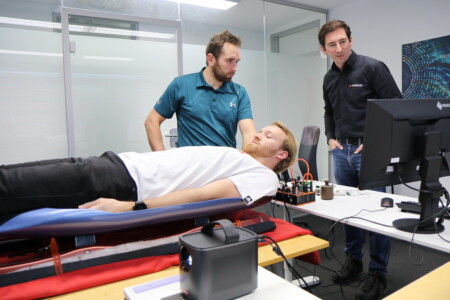
What does a person in full firefighting gear do in the sauna and on the treadmill? In a laboratory study, we want to find out how risk awareness and impulsivity change due to heat stress.

more

Houska Prize 2023: 1st place for Salzburg Research

In front of around 350 guests from business and research, the B&C Private Foundation awarded Austria’s top research achievements with the Houska Prize in three categories for the 18th time at a festive award ceremony on 27 April 2023: University research, research & development in SMEs and, for the first time, non-university research.

In this way, the B&C would like to contribute to strengthening Austria as a business location and also express its appreciation for the outstanding research work being done in this country. In addition to innovation performance, the economic effect is an essential criterion in the awarding of the Houska Prize.


TU Vienna, Salzburg Research Forschungsgesellschaft and Cube Dx win Houskapreis 2023

Screenshot von der Preisverleihung
Houskapreis 2023: Livestream der Preisverleihung am 27. April 2023

Mit dem Klick auf das Bild werden durch den mit uns gemeinsam Verantwortlichen Youtube (Google Ireland Limited) das Video abgespielt, auf Ihrem PC Skripte geladen sowie personenbezogene Daten erfasst.
Livestream of the award ceremony

In the category “University Research”, Michael Harasek, professor at the Vienna University of Technology, won with a process for processing and compressing hydrogen for fuel cells. Elisabeth Häusler from the Salzburg Research Forschungsgesellschaft convinced the expert panels in the category “Non-university research” with the Connected Boot for assessing the quality of skiing. In the category “Research & Development in SMEs”, Bernhard Ronacher, founder of the Upper Austrian company Cube Dx, received the Austrian Research Oscar for “compact sequencing”, a procedure for early sepsis diagnostics.

The three first-place winners each receive prize money of 150,000 euros.

We congratulate all the prize winners and sincerely thank everyone who contributed to this research achievement!


1st place in the category “Non-university research”:
The networked ski boot for assessing the quality of skiing

Elisabeth Häusler (2.v.r.) mit Forschungsteam
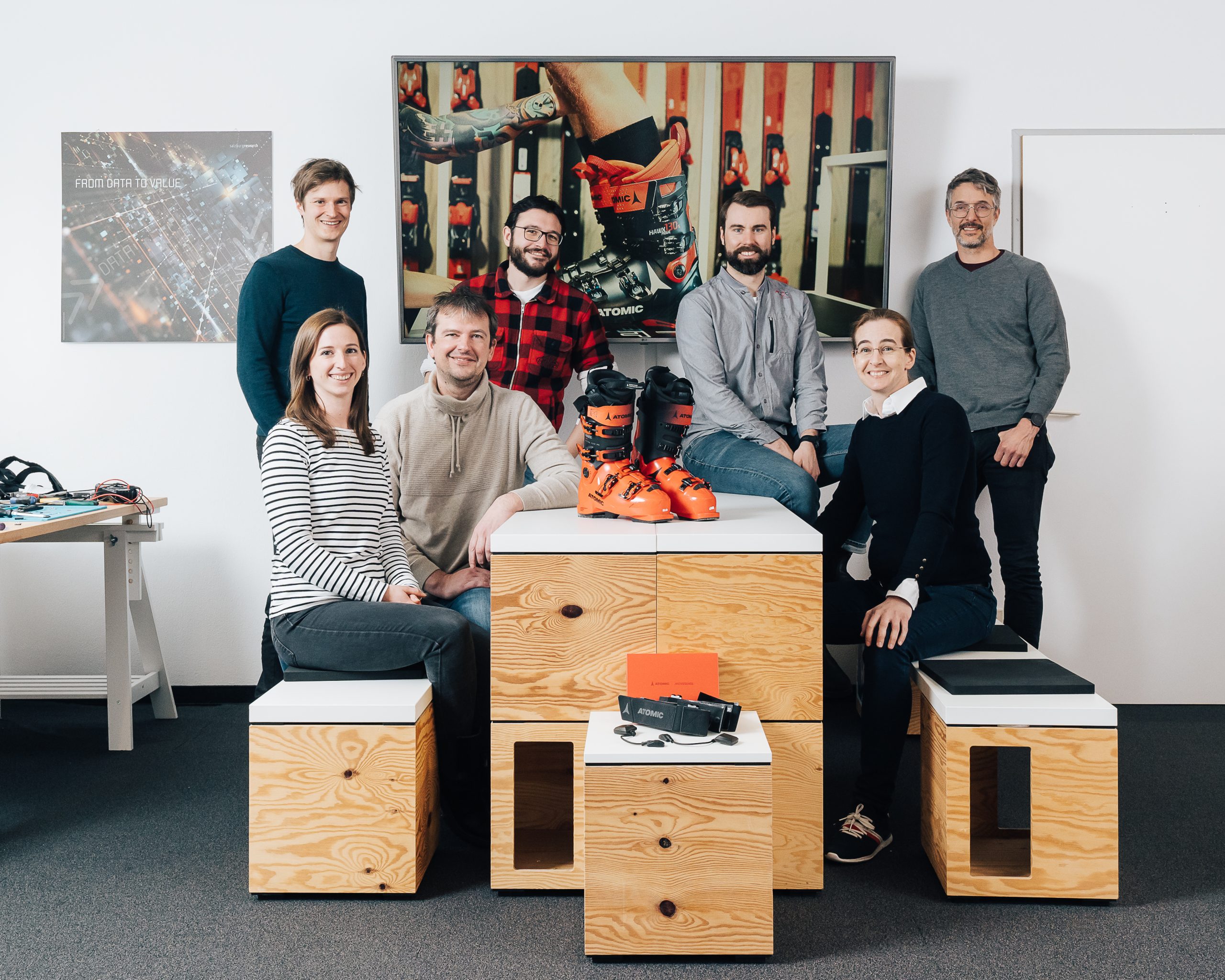
Elisabeth Häusler (2.v.r.) and team © Gregor Hofbauer

In sport, the measurement and evaluation of movement quality play an important role. Existing systems are often inaccurate and not geared towards specific sports, such as skiing. With the Connected (CTD) Boot, which was developed by the Salzburg Research Institute and the University of Salzburg, the quality of skiing can be assessed and subsequently improved with the help of various sensor technologies and machine learning. The CTD-Boot can use sensors to measure individual skiing behaviour, calculate skiing-relevant parameters such as angle of ascent or speed, and assess skiing ability with the specially developed and scientifically verified Carving Score. The data is transmitted to the smartphone and can be called up immediately. This was previously only possible in a laboratory. Skiers thus gain better insight into their own performance, can fine-tune their technique and thus improve their skiing experience. This innovation is an important milestone on the way to further digitally connected products.

Houskapreis 2023-1. Platz: aUniFo- Salzburg Research - Der vernetzte Skischuh

Mit dem Klick auf das Bild werden durch den mit uns gemeinsam Verantwortlichen Youtube (Google Ireland Limited) das Video abgespielt, auf Ihrem PC Skripte geladen sowie personenbezogene Daten erfasst.

Houska Prize of the B&C Private Foundation

The Houska Prize was established by the B&C Private Foundation in 2005 to improve the financial basis for innovation and research in Austria and to express its appreciation for the outstanding research work being done in Austria. With a total endowment of 750,000 euros, the Houskapreis is Austria’s largest private prize for application-oriented research. In this way, the B&C Private Foundation is following its foundation purpose of promoting Austrian entrepreneurship and sustainably strengthening Austria as a business location. Prizes are awarded to the best projects from university research and non-university research as well as innovative research achievements by SMEs in three separate categories. The Houska Prize is awarded annually and is named after Wolfgang Houska, a former member of the Foundation. The model for the design of the golden Houska Prize trophy was Hollywood icon Hedy Lamarr, who also went down in history as an inventor.

Reducing the risk of accidents: When the ski advises you to take a break

From the lab to the slopes: In Salzburg’s COMET competence centre “Digital Motion“, innovative sensor technology is being developed and tested to reduce the risk of accidents while skiing in the future. Intelligent sports equipment is to recognise the fatigue of skiers and advise them to take a break in good time.

For many people, alpine skiing is a highly attractive sport that is often only practised on a few days a year, but then for several hours. The combination of high motivation, comparatively little specific training and an intense physical and mental load can lead to fatigue not being recognised in time. However, signs of fatigue are an important reason for handling errors, the consequence of which can be falls and injuries.
Intelligent ski equipment warns in time

Salzburg Research and the University of Salzburg are therefore working together with Atomic on intelligent ski equipment to provide early warning of fatigue. In an alpine skiing study, changes in subjective, physiological and biomechanical parameters were recorded in the course of a physically demanding day of skiing in the Schladming-Dachstein ski area. The findings from the measurements in the laboratory and on the snow are used to develop algorithms for the detection of fatigue. In this way, automated feedback can be generated using training-scientific, biomechanical and sports-psychological factors coupled with know-how in sensor technology, data analysis and artificial intelligence.

The researchers at the Competence Centre are also developing novel interaction concepts for how the ski can pass on its recommendations to the skiers in real time. With innovative, scientifically tested setups of sensors, algorithms and feedback systems integrated into sports materials, ski equipment becomes “intelligent”. 

The research work is financed by the participating industrial companies, the research promotion agency FFG and the province of Salzburg within the framework of the COMET competence project Digital Motion led by Salzburg Research.


Press release with details on the research work and the publication (in German):


Rehabilitation in case of leg amputation: Mobile gait analysis in everyday life enables remote care

The analysis of unhealthy gait patterns is an important basis for developing appropriate measures to improve the quality of life of leg amputees. A new portable sensor system makes it possible to collect data in everyday life. Researchers from the Salzburg Research Forschungsgesellschaft proved in a study that the mobile system can keep up with the previous gold standard.

The human gait pattern varies greatly from person to person. It develops and changes due to physical conditions, life circumstances and behaviour as well as the development of individual techniques. Essential categories for a harmonious and flowing gait pattern are left-right symmetry and dynamics.

Amputations change the biomechanical characteristics and thus the gait pattern. Atypical walking requires up to twice as much metabolic energy as typical walking. The analysis of unhealthy gait patterns is therefore very important in order to be able to develop measures to improve the quality of life of those affected. Inpatient gait analysis is therefore an essential part of rehabilitation: prosthesis wearers walk a few steps on a diagnostic mat as part of the current gold standard.

In order to move from this laboratory situation to a more meaningful diagnosis for everyday life, researchers from Salzburg Research have further developed a portable sensor system and evaluated it with regard to scientifically durable results.

From inpatient to outpatient: Everyday data help with rehabilitation

For mobile gait analysis in everyday life, the existing Suralis feedback system from Saphenus was adapted into a data recording system consisting of an inertial measurement unit (IMU) and a pressure measurement sock. Salzburg Research developed algorithms to calculate the stance phase duration and the difference between the left and right leg. The algorithm was evaluated in both prosthesis wearers and healthy adults.

The results confirm: The wearable system is a suitable option for mobile gait analysis. “Leg amputees could wear the system in everyday life and send the measurement data remotely to the supervising doctor. In contrast to the few steps in the laboratory, the significantly larger data set could lead to better diagnostics and thus better care in rehabilitation,” says Severin Bernhart, from the research institute Salzburg Research, which specialises in movement data analysis.

In the future, the mobile sensor system could enable spatio-temporal measurements of gait in everyday environments to support leg amputees in rehabilitation and also enable remote care. For this purpose, suitable interfaces will be developed to enable feedback for those affected on the basis of reliable data collected in everyday life.

More information:


How to find us
Salzburg Research Forschungsgesellschaft
Jakob Haringer Straße 5/3
5020 Salzburg, Austria
Top