
Core Competencies

Innovation & Value Creation
Value Creation: Added Value Through Innovation Data-driven innovations are changing the economy and society. They help solve problems, increase efficiency and develop new products and services. The Internet of Things, low-cost sensor technology, the generation of “digital natives” and a sustainable lifestyle are important drivers of innovation. We use effective methods to examine operational success factors, added value and strategies for IoT-based innovations for companies in different market segments. We support companies in the analysis of innovation potential and the selection, implementation and evaluation of innovative projects and business models. Technologies & Methods:
- Potential analyzes and methodical support for innovation projects
- Data-based product and service innovations
- Network and platform based business models

Mobility & Transport Analytics
Mobility & Transport Analytics: Digital Transformation in Mobility The Mobility & Transport Analytics research group shapes the mobility transition through innovative, data-driven solutions. The team designs, develops, and evaluates methods and systems for collecting, analysing, and visualising mobility and transport data in pilot applications. Companies and public institutions benefit from the research group's scientifically sound and application-oriented expertise in making evidence-based decisions. The combination of research excellence and strong application relevance helps transform mobility data into valuable information, optimise traffic flows and operational processes, and ensure the safety of all road users.
Human Motion Analytics
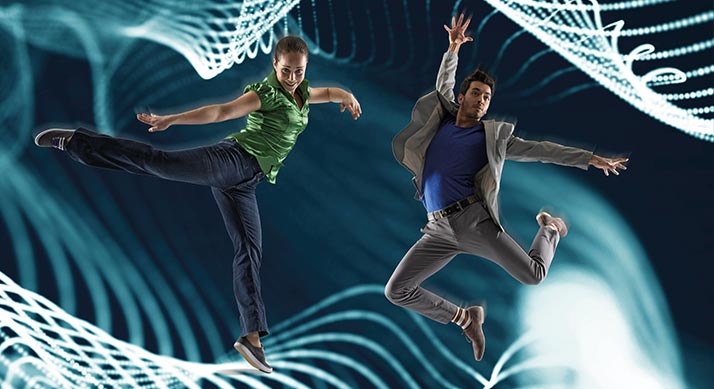
User-Centered Movement Data Analytics
Motion is an omnipresent aspect of our lives and an essential component of innovations in the areas of health, sports and fitness. We analyze motion data from a variety of data sources. Using methods from signal processing, statistics and machine learning, we evaluate data quality, identify movement patterns and develop models. This detailed knowledge about the quality of movement enables novel applications for users – to increase health, performance, safety or the enjoyment of movement.
Technologies & Methods:
- Technologies for the collection of human movement
- Data analysis and development of algorithms for the evaluation of human motion quality
- Prototype development for measuring the effects of interventions
- Secure and sustainable research data management

Intelligent Connectivity
Intelligent Connectivity: Reliably Networked It all comes down to networking: The basis for the Internet of Things is a reliable, secure and increasingly wireless network. A wide variety of often mobile devices and components are networked and large volumes of data are exchanged quickly, securely and cost-effectively. We provide support for sophisticated applications in planning and development, management and monitoring through to analysis using modern data science methods. To ensure that data travels securely across the network and generates added value - trustworthy and reliable. Technologies & Methods:
- Software-defined networking & virtualization of network functions
- Modeling, measuring and monitoring of complex communication systems
- Artificial intelligence for communication networks

 © 2026 Salzburg Research Certified EN ISO 9001