
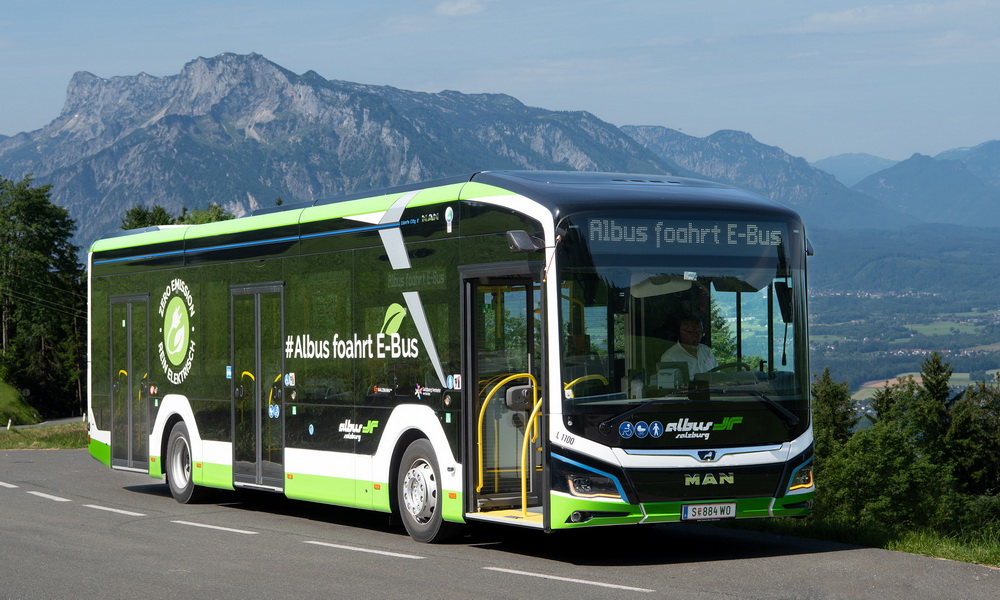
Smart charging management for growing electric bus fleets
How can growing electric bus fleets be operated reliably and energy-efficiently? The OptiChargE research project supported the electrification of Albus’s public transport services in Salzburg and developed a smart charging management system. During the 13-month pilot phase, peak loads were reduced by up to 75 per cent. The results provide important insights for the further expansion of electric bus fleets.
The transition from diesel buses to battery-electric vehicles requires more than just new powertrains and charging infrastructure. Energy supply, software, data and operational processes must also be coordinated. Salzburg Research, in collaboration with Albus Salzburg Verkehrsbetrieb GmbH, EQOS Energie Österreich GmbH and Consilio Information Management GmbH, investigated how this can be achieved in practice as part of the OptiChargE research project.
Led by Salzburg Research, the research team developed an integrated charging management system that consolidates vehicle, charging, operational and infrastructure data and optimises charging processes. The solution was tested and further developed over a 13-month period whilst in regular operation. During this time, the electric bus fleet grew from seven to 58 vehicles, whilst the number of charging points rose from 20 to 56.
“The research findings show that the electrification of bus fleets involves far more than simply replacing the powertrain. Vehicles, charging infrastructure, energy supply, data, software and operational processes must be viewed as an integrated system,” explains Cornelia Zankl of Salzburg Research, who led the project.
Up to 75 per cent reduction in peak loads
A key objective was to distribute the available electrical power efficiently amongst the buses without compromising their operational readiness.
The results show clear benefits: compared with an uncontrolled charging strategy, in which all buses are charged immediately at maximum power, the intelligent charging management system reduced monthly peak loads by around 55 to 75 per cent. This resulted in a calculated saving of around 80,000 euros in power-dependent grid costs over the pilot period.
Even compared with a simple time-controlled charging strategy, peak loads could usually be reduced by a further 15 to 35 per cent.
Data and operational reliability as key success factors
Practical experience highlights the importance of reliable data, standardised interfaces and the integration of existing IT systems. At the same time, operational reliability must be guaranteed at all times. Monitoring, automatic alerts and the ability to intervene manually are crucial to this.
There is also scope for optimisation in the coordination between bus operations and energy supply. For example, self-generated photovoltaic electricity can be utilised more effectively through tailored scheduling and targeted interim charging.
Further analyses revealed that weather conditions and traffic conditions have a greater influence on the energy consumption of electric buses than individual driving styles.
Recommendations for the electrification of public transport
The findings from OptiChargE show that transport operators should view the electrification of their fleets as an integrated planning process. A phased roll-out, in which operational experience is continuously incorporated into further development, has proven successful.
At the same time, long-term requirements regarding grid connection, charging infrastructure and energy supply should be taken into account even before the transition begins. The research findings thus provide practical recommendations for transport operators wishing to electrify or further expand their bus fleets.
The full report is available on the OptiChargE project page.
The research project “OptiChargE – Optimised and automated charging management for battery electric bus fleets” ran from February 2024 to September 2026 and was funded by the Climate and Energy Fund as part of the Zero Emission Mobility programme and managed by the Austrian Research Promotion Agency (FFG).
Further Information:
- Project information, including the final report and presentation from the closing event: OptiChargE – Optimised and automated charging management for battery electric bus fleets
- Press release:Lademanagement und Skalierung von E-Bus-Flotten: Erkenntnisse aus Forschung und Realbetrieb






 Certified EN ISO 9001