HMD special issue on eTourism

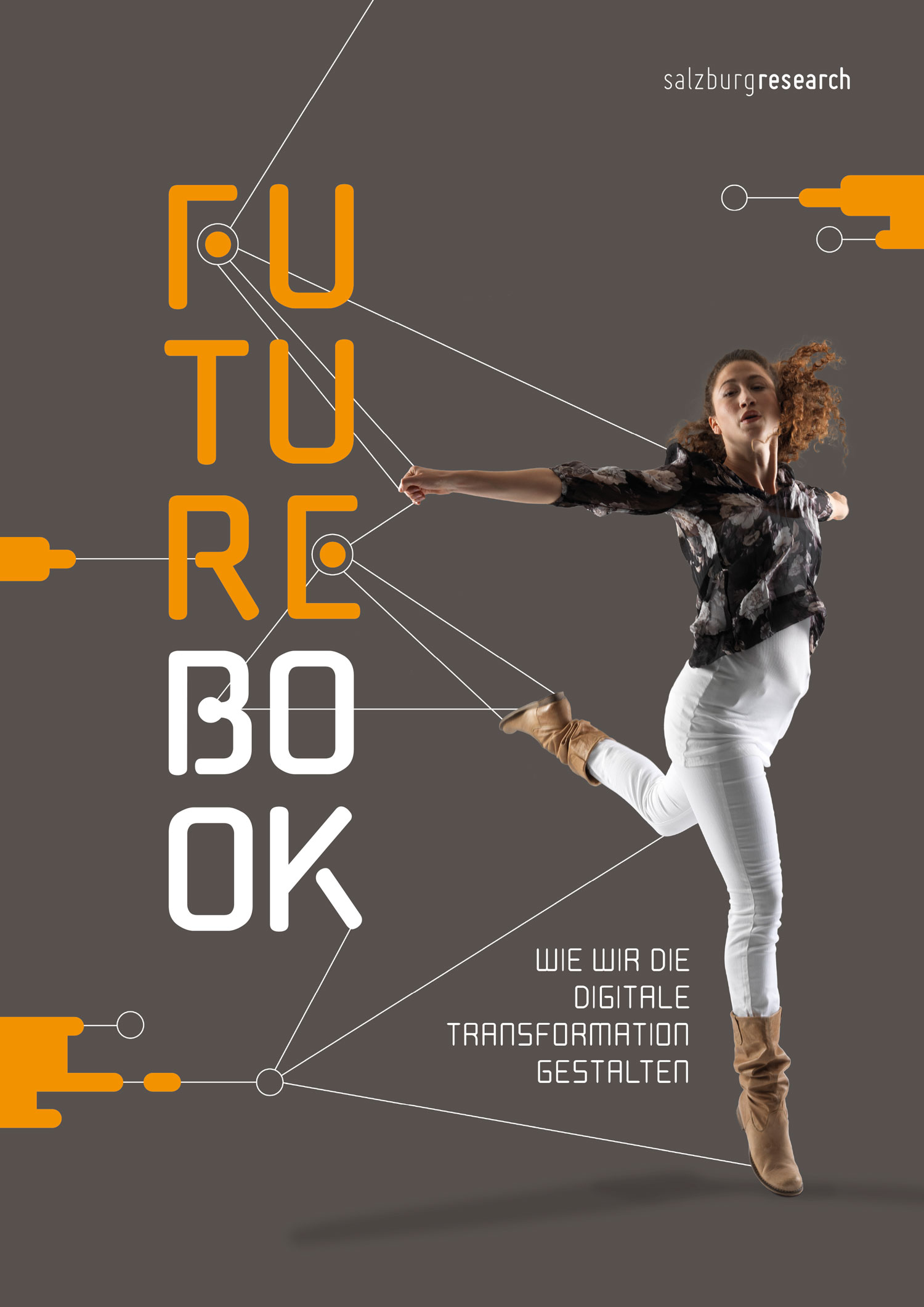
image of HMD special issue on eTourism Together with Markus Lassnig (head of e-motion competence centre for ICT in the tourism- and leisure-industries) we edited an HMD special issue on eTourism.
„Experience Economy“ is a term to describe a phenomenon in our society, which describes that the experience itself is being made a product. Tourism is one of the branches that takes the role of the dream factory. And because tourism is information intensive it makes heavy use of information and communication technologies.

    This special issue has two types of contributions

  • on the one hand, we have socio-economic papers that explain the cultural and societal backgrounds and provide facts and figures;
  • on the other hand, we have technical contributions which are showcases of knowledge-based systems that explain the state-of-the-art of advanced IS systems.

See http://hmd.dpunkt.de/270/ for further details.

Add comment December 21st, 2009

A successfull viva on MM content re-use in the Semantic Web

I happened to be external examiner of Tobi Bürger’s viva entitled “A Conceptual Model for Intelligent Content for the Semantic Web” (with Dieter Fensel as 1st supervisor; University of Innsbruck/STI2). And today Tobias successfully passed his viva. Congratulations!

IMHO opinion this work is interesting as it offers

  • a concise definition of the user requirements
  • a conceptual model (the RICO model – reuseable intelligent content model) and finally,
  • a prototypical implementation in firefox

And, of course, as Tobias has been with Salzburg Research for several years (until summer 2008), we are somewhat proud of his work as well ;-)

Here’s the abstract:

Retrieving multimedia remains a challenge on the Web of the 21st century. This is due,
among other things, to the inherent limitations of automatic multimedia understanding,
limitations which equally apply to the Web 2.0 or its semantic counterpart. Describing
multimedia resources in the form of metadata is thus often seen as the only viable way to
enable ecient multimedia retrieval. Assuming the availability of metadata descriptions,
which is supported by technological developments associated to the user-generated Web,
eectively indexing multimedia requires mediating among the wide range of metadata
schemes and formats presently used to annotate such resources. Semantic technologies
have been identied as a potential solution for this large-scale interoperability problem.
The aim of this thesis is to propose a single point of access for the retrieval of
multimedia content on the Web in order to foster Web-scale content reusability. We
contribute a model for Intelligent Content which can become an integral part of the socalled
Semantic Web. In this next generation of the Web, content is envisioned to have
well-dened meaning, enabling machines to automatically determine what the content
is about, under which circumstances it can be used, and what one needs to oblige to
consume it.

Our rst goal is to investigate media reuse from an end user perspective. We identify
it as a problem in multimedia retrieval, and analyze characteristics and forms of reuse of
multimedia content, barriers and relevant content properties. We analyze the retrieval
behavior of media professionals, and, most notably the properties which they use to
search for, and assess the relevance of media objects. Based on the result of this analysis,
we propose a conceptual model dimensioning reuse of media objects. The model is
validated in an end-user survey.

Our second goal is to introduce a conceptual model and a set of ontologies to mark up
multimedia content embedded inWeb pages and mechanisms to deploy such descriptions
on the Semantic Web. Starting from typical scenarios in which multimedia content is
published on the Web, and on insights gained from existing literature, the thesis species
a set of requirements which a model for the semantic description of multimedia content
should fulll. The proposed model, which is called RICO (\Reusable Intelligent Content
Objects”), realizes a multimedia resource-centric view of HTML pages. Its overall strategy
is to exploit existing descriptions in Web pages and native formats, and to attach
further semantic descriptions to the content. The model is implemented using a set of
Semantic Web ontologies which resort to existing standards such as MPEG-21 Digital
Items, Dublin Core, FOAF, Annotea, or FRBR. The model is evaluated from dierent
perspectives: Its quality is assessed using quality metrics for conceptual and reference
models. Its coverage is measured using data analysis. Finally, its interoperability is
shown via the denition of mappings to established metadata formats such as XMP,
DIG35, and MPEG-7.

Our third goal is to propose methods to smoothly integrate descriptions adhering to
the RICO model and descriptions available in legacy formats into existing HTML pages.
The former is done by analyzing formalisms to integrate semantic descriptions in HTML
pages and by sketching a way how the descriptions can be deployed together with the
content being described. To achieve the latter, we propose ramm.x (“RDFa deployed
multimedia metadata”), a model which can integrate legacy descriptions into the Semantic
Web, and attach them to the content being described. The deployment methods are
prototypically implemented in a browser plug-in to demonstrate their implementability.
We conclude the thesis by sketching possible research directions for multimedia semantics
beyond the scope of our work.

Add comment June 12th, 2009

Research Policies and the speed of impact

I happened to read two articles on research development

  1. One was in “Financial Times Deutschland” (FTD) on “Research in Austria” (Oct. 21, 2008 – also available as http://www.ftd.de/forschung_bildung/forschung/:Forschung-in-%D6sterreich-Jeder-freie-Cent-flie%DFt-in-die-Labore/435388.html?nv=cd-rss900).
  2. The other one was in “research eu” (No. 56, June 2008) on the “Finnish model tops the ranking”.

The first article argues that Austria has substantially intensified its research activities and has come from an innovation follower to the position of an innovation leader. The research quote was increased form 1,7 % (in 1997) to 2,63 % in 2008. The increase has been achieved by more spending from the public as well as from industry (fostered by tax incentives and programmes).

The second article argues in a similar fashion about Finland (albeit with a longer historical perspective).

The interesting thing to me is, that in a short period – we are only talking about 10+ years in both cases – a country can be reshaped concerning its FTI-policy. I think this is amazing, I would not have thought that this is possible in such short timeframes (even one might argue that for a sustainable impact including a change of culture this will take at least 25 years …).

Add comment November 2nd, 2008


Tag Cloud

Categories

Calendar

June 2013
M T W T F S S
« Feb    
 12
3456789
10111213141516
17181920212223
24252627282930